Heartworm disease is a serious, potentially life threatening disease in cats. The disease is transmitted by infected mosquitoes that bite the cat and inject the larvae of the heartworm parasite. In the cat, these larvae mature into heartworms in about 6 months. This transmission has to happen through the mosquito to the cat, not from cat to cat. The worms infect the blood vessels of the lungs and heart, causing damage.

There is no treatment approved by the FDA in the United States to treat heartworm disease in cats. The only therapy is supportive, in an attempt to help the cat survive the disease, which lasts 2 to 3 years.
The FDA has approved 4 treatments to prevent heartworm disease in cats: Heartguard for Cats, an oral tablet by Merial. Interceptor, an oral tablet by Novartis. Revolution, a topical by Pfizer. Advantage Multi for Cats, a topical by Bayer.
These 4 treatments do not prevent the infection of the cat by the larvae from the mosquitoes. The treatments kill the larvae in the cat when they are in a particular part of their 6 month life cycle, before they mature into heartworms. Ideally heartworm prevention should be given all year, since the success of the medication depends on killing the larvae at a particular part of its life cycle. Also mosquitoes can survive the cold months indoors and carry the infection to indoor cats even in the winter.
Giving the cat the heartworm prevention monthly should be as easy as possible.
The tablets need to be given with food so they can be absorbed and ideally they should be chewed up. The tablets can be divided into 4 pieces and mixed in with food. Usually reducing the amount of food at that meal and making sure the cat is hungry will let the medication be eaten without being noticed. Some cats like the taste of the tablets and look at them as a treat but they still need to be given with food. If the cat would vomit the meal, contact your vet for instructions on when to give the cat another dose of heartworm prevention.
The topical medications are placed behind the neck. This requires pushing back the fur and squeezing out the liquid directly onto the skin. The manufacturers recommend not getting the liquid on your hands or touching the cat for 2 hours. The medication is placed behind the neck so the cat cannot groom the area. If you have multiple cats, the cat getting treatment must be isolated from the other cats for 2 hours. This prevents them from grooming each other. These topical medications have the advantage of protecting against many other parasites other than just heartworms.
Heartworm disease in cats is widespread, life threatening, and preventable. Please protect your precious companions!
At cattreeparadise.com [http://www.cattreeparadise.com] we adore cats. We have a cat info page on the web site dedicated to articles that will improve the quality of your cat's life. The articles are reviewed by a veterinarian, William Neumann DVM. Also we offer the most creative cat trees that will satisfy your cat's instinctive yearnings. We provide free shipping, a 100% satisfaction guarantee, and great customer service. Our web site, cattreeparadise.com is your best online source for quality cat trees.
Article Source: http://EzineArticles.com/7099823
Do you have a cat? Sometimes get annoyed by their inappropriate favorite sleeping places? Yes, every cat owner must know that they really like warm places, but these habit sometimes can be inconvenient because it is possible that they may sleep in a wrong place, for example: on top of the television, on the bed, in the car, even behind the refrigerator or sometimes, extremely, inside the microwave.

But now, this annoying habit can now be reduced, even eliminated with a device called Cat Heating Pad. A Heating Pad is a place or an electric heated pad that make your cat is able to sleep and curl up comfortably. This Pad size has been adjusted properly so that the cat's body will not become uncomfortable.
There are two types of Cat Heating Pads: Indoor Pad and Outdoor Cat Pad. For Indoor a Warming Pad, some of them is electronically operated, while some of them are using the heat energy from other objects such as ovens, microwaves, or televisions. While for Outdoor Cat Warming Pad, may gain heat from sunlight or the surface where the pad is placed.
If you are the type of person that truly enjoys spoiling your feline companion, then you may consider one of these as a necessary item.
Do not hesitate to use this tool, it is guaranteed safe, your pet would be more calm and it will avoid the damage of your valuables, or your television because your cat already find a warm place to curl and sleep.
Stacy really loves her home and family and lives life to the full and has been writing about her knowledge and experience. Feel free to see some of her material at Small Safe [http://smallsafe.net]
Article Source: http://EzineArticles.com/3705546
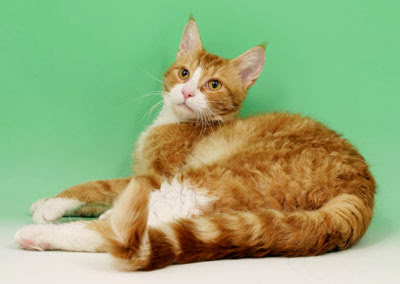
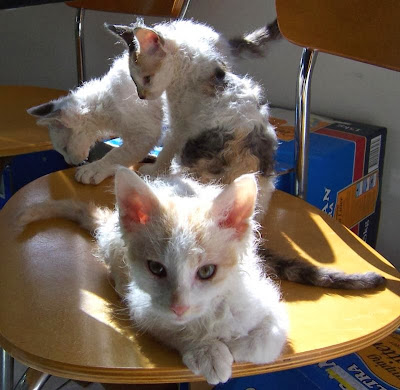
The LaPerm is a rex breed which originated in the United States and is now present in many other countries worldwide. The breed is genetically unique and not related to any other rex cat varieties, having a dominant gene causing their curly coats. They have an elegant and athletic build and are affectionate, active and outgoing in character. They are reputed to be hypoallergenic cats, provoking a significantly lower level of allergic response in humans than normal cats. Their most significant feature is their coat, which is made up of soft waves, curls and ringlets, resembling a shaggy perm.

The LaPerm is in many ways a cat of moderation with no extremes and is still true to its original type. It does however have a striking appearance because of its unusual coat. The breed standard describes a muscular foreign-type body, which is medium in size with longish legs and neck. The head is a modified wedge with gently rounded contours and a muzzle which slightly broad of the wedge. In profile the straight nose leads into a gentle break between the eyes up to a flattish forehead. LaPerms also have rather broad noses. Their flared ears are placed to follow the line of the face, while their almond shaped eyes are medium large and expressive.
Like other rexes, all colors and patterns are acceptable,although tabbies, reds and torties are well represented reflecting their origins. Also the unusual colors from the early days of the breed have been selected for, so lilac, chocolate and colorpoints are popular. Tabby points are especially attractive. Newer varieties such as ticked tabbies, shadeds and darker points are also being bred. The curl tends to open up the coat showing off shading, ticking or silver undercoats.
The coat itself is described as having a unique textured feel. It is not silky, having a certain drag on the hand like mohair and the texture comes as much from the shape of the curls as from the mixture of different hair types. It should be soft and inviting, although the shorthairs will have more texture to their coats. The coat is rather loose and bouncy often feeling springy when patted, and stands away from the body with no thick undercoat. It is light and airy and judges sometimes blow on the coat to see if it will part. The coat varies according to the season and the maturity of the cat but is essentially wavy or curly all over with the longest and most defined curls in the ruff and on the neck often falling in ringlets. There is also longer curly fur inside the ears, tufts at the ear tips and “ear muffs”, or longer, silky hair on the backs of the ears. The longhairs have a curly plumed tail while the shorthairs have tails rather like bottle brushes, and both have long curled whiskers. Sometimes the coat falls into a natural parting along the back, jokingly referred to as “the parting of the waves”.
Data refer : http://en.wikipedia.org/wiki/LaPerm